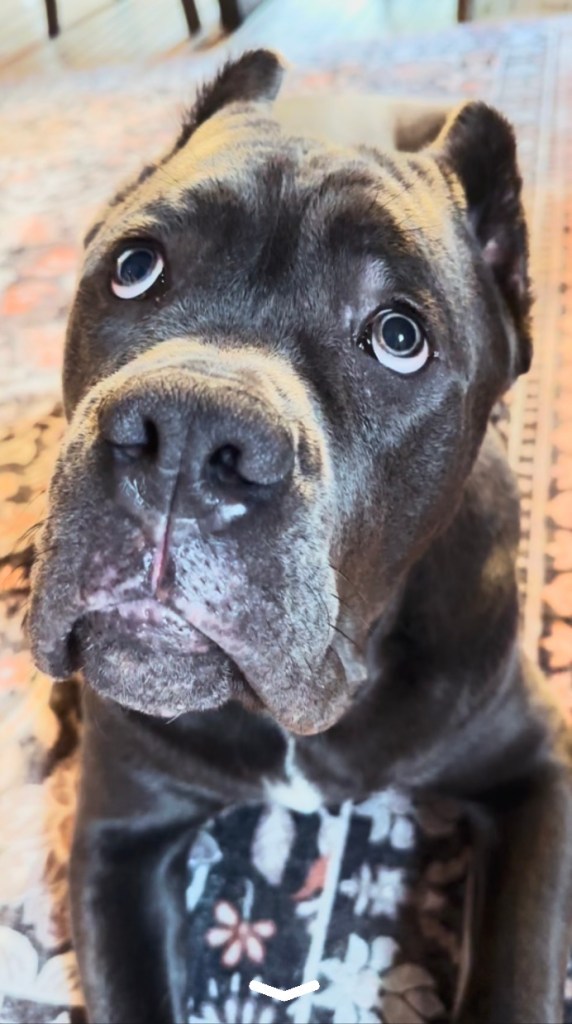
If you’ve ever shared your home with a Cane Corso, you know they are more than just “big dogs.” They are living artifacts. To look into the eyes of a Corso is to see a lineage that stretches back to the dust and thunder of Ancient Rome.
For the Sullythecorso community, understanding where these majestic guardians come from helps us appreciate their loyalty, their intensity, and that soulful “Velcro dog” nature we love today.
The Ancestor: The Canis Pugnax
The story begins with the Molossus, an ancient Greek tribe’s legendary guardian dog. When the Romans conquered Greece, they didn’t just take the art and philosophy—they took the dogs.
The Romans bred these giants into two distinct types:
1. The heavy-set ancestor of the Neapolitan Mastiff.
2. The lighter, more agile ancestor of the Cane Corso, known as the Canis Pugnax.
These weren’t just pets; they were pier’ores (war dogs). They charged into battle alongside Roman legions, often wearing spiked leather collars and carrying buckets of flaming oil on their backs to disrupt enemy cavalry.
The Name: More Than Just a Title
The name “Cane Corso” isn’t a reference to the island of Corsica. It actually derives from the Latin Cohors, which means “protector” or “guardian of the courtyard.”
Fun Fact: In ancient Italy, a “Cane Corso” was literally translated as the “Bodyguard Dog.”
The Italian Farmhand
After the fall of the Roman Empire, the Corso transitioned from a soldier to a versatile farmhand in the rural landscapes of Southern Italy (specifically Puglia, Campania, and Basilicata). For centuries, they were the “Swiss Army Knife” of Italian dogs:
• Catch Dogs: They were used to pin unruly bulls or hunt wild boar.
• Guardians: They protected livestock and the farmhouse from thieves and predators.
• Drovers: They helped move cattle to market, using their imposing presence to keep the herd in line.
A Brush with Extinction
By the mid-20th century, the Cane Corso almost vanished. Modernization, the mechanization of farming, and the devastation of World War II meant the Corso’s “job description” was becoming obsolete. By the 1970s, only a few specimens remained in the remote back-country of Italy.
The Great Resurrection
In the late 1970s and early 1980s, a group of Italian enthusiasts—led by Dr. Paolo Breber—began a concerted effort to save the breed. They tracked down the remaining dogs on Southern farms and began a selective breeding program to stabilize the Corso we recognize today.
• 1983: The first breed club (SACC) was formed.
• 1994: The breed received official recognition from the ENCI (Italian Kennel Club).
• 2010: The American Kennel Club (AKC) officially recognized the Cane Corso.
The Modern Corso: Why History Matters
When your Corso (like our favorite, Sully!) leans against your leg or watches the front door with quiet intensity, they are channeling thousands of years of history. They aren’t aggressive by nature; they are discerning. Their history as a protector means they are hardwired to evaluate threats and stay fiercely devoted to their “legion”—that’s you.
Today, the Corso has traded the Roman Colosseum for the backyard, but that noble, ancient spirit remains unchanged.
Do you see those Roman “war dog” traits in your Corso? Let us know in the comments how your pup lives up to their legendary history!
 sullythecorso